
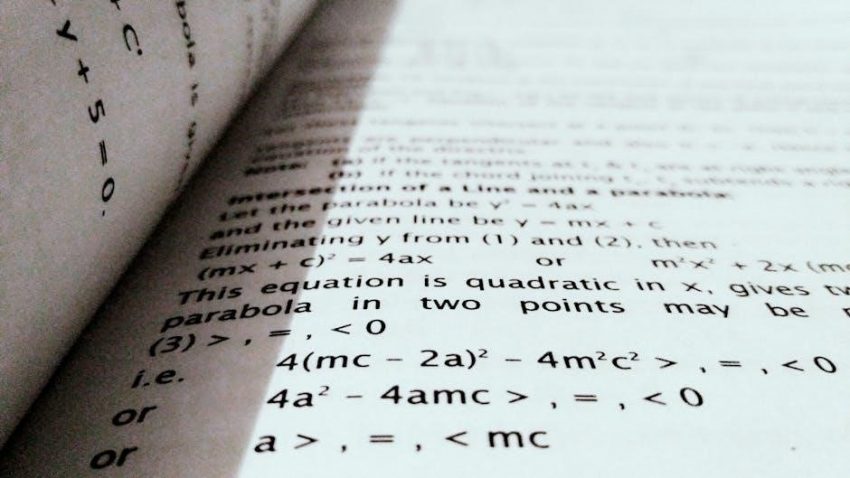
Haese Mathematics’ Core Topics SL provides comprehensive worked solutions in PDF format, aiding student understanding. Resources include textbooks,
worksheets, and unit tests, totaling over 3000 pages.
These solutions cover algebra, functions, geometry, trigonometry, statistics, and more, fully equipping students for the IB Mathematics SL course.
Overview of the IB Mathematics SL Curriculum
The IB Mathematics: Analysis and Approaches SL curriculum focuses on developing analytical and problem-solving skills. Core areas include algebra – linear equations, quadratics, exponents, and sequences – forming a foundational base. Students delve into functions and their graphs, exploring transformations and applications of linear and quadratic functions.
Geometry and trigonometry are crucial components, covering angles, trigonometric ratios, and non-right angled triangles. Statistical understanding is built through data representation, measures of central tendency, and probability concepts, including the binomial distribution.
Haese Mathematics’ resources, including the worked solutions PDF, align directly with this curriculum. They provide detailed support for each topic, ensuring students grasp the concepts and build confidence. The curriculum aims to prepare students for higher-level mathematics and real-world applications, and these resources are designed to facilitate that preparation.
Importance of Worked Solutions for SL Math
Worked solutions are indispensable for mastering IB Mathematics SL. They move beyond simply providing answers, demonstrating how to arrive at the correct solution, clarifying each step in the process. This is particularly valuable when tackling complex problems in algebra, functions, or trigonometry.
Haese Mathematics’ PDF of worked solutions offers over 3000 pages of detailed explanations, covering exercises, review sets, and investigations. Students can independently verify their understanding, identify areas needing improvement, and learn from common mistakes;
Access to these resources builds confidence and promotes active learning. By studying solved examples, students develop critical thinking skills and a deeper grasp of mathematical concepts. Utilizing these resources effectively is key to exam success and a solid foundation for future mathematical studies.

Core Algebra Topics & Solutions
Algebra forms a cornerstone of IB Math SL, with Haese Mathematics’ PDF providing extensive worked solutions. These cover linear, quadratic equations, exponents, logarithms, and sequences.
Linear Equations and Inequalities: Worked Examples
Mastering linear equations and inequalities is fundamental in IB Mathematics SL. Haese Mathematics’ worked solutions PDF offers detailed, step-by-step guidance through a variety of problems. These examples demonstrate techniques for solving equations with one or multiple variables, including those requiring rearrangement and simplification.
The resources cover solving linear inequalities, representing solutions on number lines, and understanding the impact of multiplying or dividing by negative numbers. Students will find solutions to problems involving real-world applications, enhancing their ability to model and solve practical scenarios.
Key areas addressed include finding intercepts, determining slopes, and graphing linear relationships. The PDF provides numerous practice exercises with fully worked solutions, allowing students to build confidence and proficiency in these essential algebraic skills. These examples are crucial for success in subsequent topics and exam preparation.
Quadratic Equations: Solving and Graphing with Solutions
Quadratic equations are a cornerstone of IB Mathematics SL, and Haese Mathematics’ worked solutions PDF provides extensive support. Students will find detailed solutions for solving quadratic equations using factoring, completing the square, and the quadratic formula. The resources clearly illustrate each method, emphasizing the conditions under which each is most appropriate.
The PDF also focuses on graphing quadratic functions, identifying key features like the vertex, axis of symmetry, and intercepts. Worked examples demonstrate how to convert between different forms of a quadratic equation (standard, vertex, and factored form).
Furthermore, students can explore applications of quadratic equations in modeling real-world problems. The comprehensive solutions enable students to confidently tackle complex problems and prepare effectively for examinations, building a strong foundation in algebraic techniques.
Exponents and Logarithms: Detailed Solution Strategies
Haese Mathematics’ worked solutions PDF offers a robust resource for mastering exponents and logarithms within the IB Mathematics SL curriculum. Detailed strategies are provided for simplifying expressions involving exponents, including fractional and negative exponents, alongside the application of exponent rules.
The PDF thoroughly covers logarithmic functions, focusing on converting between exponential and logarithmic forms. Worked examples demonstrate solving exponential and logarithmic equations, emphasizing the importance of checking for extraneous solutions.

Students will find clear explanations of logarithmic properties and their application in simplifying complex expressions. The resource also includes practice problems with step-by-step solutions, enabling students to build proficiency and confidence in handling these crucial mathematical concepts, preparing them for exam success.
Sequences and Series: Arithmetic and Geometric Progressions ― Solved
Haese Mathematics’ worked solutions PDF provides comprehensive support for understanding arithmetic and geometric progressions in IB Mathematics SL. The resource details strategies for identifying arithmetic and geometric sequences, calculating common differences and ratios, and determining the general term (nth term) of each progression.
Solved examples demonstrate how to calculate the sum of finite arithmetic and geometric series, including the use of relevant formulas. The PDF also addresses infinite geometric series, explaining the conditions for convergence and calculating the sum to infinity.
Students benefit from step-by-step solutions to a variety of problems, enhancing their ability to apply these concepts in different contexts. This resource equips students with the skills needed to confidently tackle sequence and series questions on the IB SL exam.

Functions and Their Graphs
IB Mathematics SL worked solutions, in PDF format, thoroughly cover function notation, transformations, and graphing techniques. Detailed examples clarify linear, quadratic,
exponential, and logarithmic functions.
Function Notation and Transformations: Step-by-Step Solutions
Understanding function notation, like f(x), is fundamental in IB Mathematics SL. The worked solutions provide detailed, step-by-step guidance on evaluating functions for specific inputs and interpreting the results. These resources clearly demonstrate how to manipulate functions and apply various transformations – translations, reflections, and stretches – to their graphs.

Haese Mathematics’ materials offer extensive examples illustrating how changes to the function’s equation impact its graphical representation. Students will find comprehensive solutions that break down complex problems into manageable steps, fostering a deeper understanding of the relationship between algebraic representation and visual interpretation. The PDF format allows for easy access and review of these crucial concepts, ensuring students are well-prepared for exam questions involving function analysis and manipulation.
These solutions aren’t just about finding the answer; they emphasize the process of problem-solving, equipping students with the skills to tackle unfamiliar challenges confidently.
Linear Functions: Equations, Graphs, and Applications ⎯ Worked
Linear functions form a cornerstone of the IB Mathematics SL curriculum, and the worked solutions from Haese Mathematics provide thorough support. These resources detail how to determine the equation of a line given various information – slope and intercept, two points, or a graphical representation.
Step-by-step solutions illustrate graphing linear functions, understanding slope as rate of change, and solving related problems. The PDF materials cover real-world applications, demonstrating how linear models can be used to represent and analyze practical scenarios. Students benefit from seeing multiple approaches to solving the same problem, enhancing their problem-solving flexibility.
The comprehensive nature of these solutions ensures a solid grasp of linear functions, preparing students for more advanced mathematical concepts and exam-style questions. Emphasis is placed on understanding the connection between equations, graphs, and their practical implications.
Quadratic Functions: Vertex Form and Problem Solving ⎯ Solutions
Quadratic functions are extensively covered in the IB Mathematics SL syllabus, and the worked solutions offer detailed guidance. These resources focus on mastering various forms of quadratic equations – standard form, factored form, and crucially, vertex form.
Step-by-step solutions demonstrate converting between these forms, finding the vertex, axis of symmetry, and intercepts. The PDF materials provide clear explanations of how to solve quadratic equations using factoring, completing the square, and the quadratic formula.
A significant emphasis is placed on problem-solving, showcasing how quadratic functions model real-world scenarios like projectile motion and optimization problems. Students gain confidence through numerous examples, building a strong foundation for tackling complex exam questions. The solutions highlight efficient techniques and common pitfalls to avoid.
Exponential and Logarithmic Functions: Detailed Worked Examples
Exponential and logarithmic functions represent a core component of the IB Mathematics SL curriculum, and the worked solutions provide in-depth support. These resources meticulously detail the properties of exponential growth and decay, alongside the inverse relationship with logarithmic functions.
Step-by-step solutions illustrate solving exponential and logarithmic equations, including those requiring manipulation of logarithmic laws. The PDF materials demonstrate techniques for graphing these functions, identifying asymptotes, and determining domains and ranges.
Emphasis is given to applications in real-world contexts, such as compound interest, population growth, and radioactive decay. Students benefit from numerous worked examples, building proficiency in handling complex problems. The solutions clarify common errors and reinforce a solid understanding of these crucial mathematical concepts.

Geometry and Trigonometry
Geometry and trigonometry solutions, available in PDF format, cover angles, trigonometric ratios, and triangle properties.
Resources include detailed explanations and solved problems.
Angles and Radian Measure: Conversion and Application ⎯ Solved
Understanding angles is fundamental in trigonometry, and the IB Mathematics SL curriculum emphasizes both degree and radian measures. Worked solutions provide step-by-step guidance on converting between these units, a crucial skill for problem-solving. These resources demonstrate how to apply angle measures in geometric contexts, including calculating arc lengths and sector areas.
Haese Mathematics’ materials offer numerous examples illustrating the practical application of radian measure in trigonometric functions and equations. Students will find detailed solutions for problems involving angle transformations and their impact on trigonometric values. The PDF resources cover a wide range of exercises, from basic conversions to more complex applications within geometric figures. Mastering these concepts is essential for success in the IB SL exam, and these solved examples offer invaluable support.
Furthermore, the worked solutions clarify common misconceptions and demonstrate efficient problem-solving strategies, ensuring a solid grasp of this core trigonometric principle.
Trigonometric Ratios and Identities: Worked Solutions
IB Mathematics SL heavily features trigonometric ratios (sine, cosine, tangent) and their reciprocal counterparts. Haese Mathematics’ worked solutions provide detailed breakdowns of calculating these ratios in right-angled triangles, emphasizing the SOH CAH TOA mnemonic. Beyond basic calculations, the resources delve into fundamental trigonometric identities – Pythagorean, reciprocal, and quotient – demonstrating how to manipulate and simplify trigonometric expressions.
The PDF materials offer numerous solved examples showcasing the application of these identities to verify equations and solve trigonometric problems. Students benefit from step-by-step guidance on proving identities and using them to find exact values of trigonometric functions for specific angles. These resources also cover angle sum and difference identities, crucial for more advanced problem-solving.
Mastering these concepts is vital for success, and the worked solutions offer clarity and build confidence in tackling complex trigonometric challenges.
Non-Right Angled Triangles: Sine, Cosine Rule ― Detailed Solutions
IB Mathematics SL extends triangle problem-solving beyond right angles, introducing the Sine and Cosine Rules. Haese Mathematics’ worked solutions offer comprehensive guidance on applying these rules to find missing sides and angles in any triangle. The PDF resources meticulously demonstrate when to use each rule – Sine Rule for opposite angles and sides, Cosine Rule when two sides and an included angle are known.
Detailed step-by-step solutions illustrate how to correctly substitute values, rearrange formulas, and utilize calculators effectively. Students gain proficiency in solving ambiguous cases with the Sine Rule, understanding when one, two, or no solutions exist. The materials also cover finding areas of triangles using these rules.
These worked examples build a strong foundation for tackling complex geometry problems, ensuring students can confidently apply these essential trigonometric tools.
Area of Triangles: Formulas and Worked Examples
IB Mathematics SL requires mastery of various triangle area calculation methods. Haese Mathematics’ worked solutions PDF resources comprehensively cover these, starting with the familiar 1/2 * base * height formula. However, the materials extend beyond this, demonstrating how to calculate area when only sides are known, utilizing the formula: 1/2 * ab * sin(C).
Detailed examples showcase applying this formula alongside the Sine Rule to find angles when only sides are given. Furthermore, Heron’s formula for finding the area given all three sides is thoroughly explained with step-by-step solutions.
These worked examples emphasize correct unit usage and calculator application, building confidence in solving diverse triangle area problems. Students learn to select the most efficient formula based on the given information.

Statistics and Probability
IB Mathematics SL statistics and probability worked solutions cover data representation, central tendency, dispersion, basic probability, and binomial distribution—all in PDF format.
Data Representation: Histograms, Box Plots ― Solution Examples
Understanding data representation is crucial in IB Mathematics SL, and worked solutions provide clarity on constructing and interpreting histograms and box plots. These solutions, often found in PDF format within resources like Haese Mathematics’ materials, demonstrate step-by-step calculations for frequency distributions, bin widths, and interquartile ranges.
Solution examples meticulously illustrate how to draw accurate histograms, correctly label axes, and determine the shape of the distribution. For box plots, the solutions detail finding the median, quartiles, and identifying potential outliers. These detailed guides help students avoid common mistakes in data visualization.
Furthermore, the worked solutions extend to analyzing the data presented in these graphical forms, enabling students to draw meaningful conclusions about the central tendency, spread, and skewness of datasets. Accessing these resources is vital for exam preparation and mastering statistical concepts.
Measures of Central Tendency and Dispersion: Worked Calculations
IB Mathematics SL requires a firm grasp of measures of central tendency – mean, median, and mode – and dispersion – range, interquartile range, and standard deviation. Worked solutions, readily available in PDF format from resources like Haese Mathematics, offer detailed, step-by-step calculations for these statistical measures.
These solution examples demonstrate how to correctly apply formulas, handle different datasets, and interpret the results. They clarify the nuances of calculating standard deviation for both populations and samples, a common area of difficulty. The solutions also illustrate how to identify and address potential errors in calculations.
By studying these worked calculations, students can confidently apply these concepts to solve complex problems and accurately analyze data sets, crucial skills for success in the IB SL exam. These resources are invaluable for building a strong statistical foundation.
Probability: Basic Concepts and Calculations ― Solved
IB Mathematics SL introduces fundamental probability concepts, including sample spaces, events, and probability rules. Worked solutions, often found in PDF format through resources like Haese Mathematics, provide clear demonstrations of basic probability calculations. These solutions cover mutually exclusive events, independent events, and conditional probability.
Students benefit from seeing step-by-step solutions to problems involving Venn diagrams, tree diagrams, and probability formulas. These solved examples illustrate how to determine probabilities, calculate expected values, and apply the addition and multiplication rules effectively.
Understanding these concepts is vital for tackling more complex probability problems. Access to detailed worked solutions allows students to solidify their understanding and build confidence in their ability to solve a wide range of probability questions on the IB SL exam.
Binomial Distribution: Worked Problems and Applications
IB Mathematics SL extensively covers the Binomial Distribution, a crucial statistical model for analyzing repeated independent trials. Worked solutions, readily available in PDF resources like those from Haese Mathematics, demonstrate how to apply the binomial probability formula and calculate probabilities for specific outcomes.
These solved problems illustrate identifying binomial experiments, determining the number of trials (n), the probability of success (p), and calculating probabilities using the formula P(X = k) = (nCk) * pk * (1-p)(n-k).
Students gain proficiency in solving real-world applications, such as coin flips, quality control, and survey analysis. Access to detailed worked examples ensures a strong grasp of the binomial distribution’s concepts and its practical applications, preparing them for exam success.

Exam Preparation & Resources
IB Math SL preparation utilizes past paper solutions and Haese Mathematics resources. PDF documents offer extensive practice, aiding students in mastering core concepts and exam techniques.
Past Paper Solutions: Accessing and Utilizing Resources
Accessing past paper solutions is crucial for effective IB Mathematics SL exam preparation. Numerous online platforms and resources offer collections of previously administered papers, often accompanied by detailed worked solutions in PDF format. These resources, like those from Haese Mathematics, allow students to familiarize themselves with the exam’s structure, question types, and difficulty level.
Utilizing these resources effectively involves more than simply checking answers. Students should first attempt the papers under timed conditions to simulate the exam environment. Afterwards, carefully reviewing the worked solutions is paramount. Pay close attention to the methodologies employed, identifying areas where understanding is lacking.
Analyzing common mistakes and understanding the examiner’s expectations are key benefits. Furthermore, resources like heyzine.com provide access to comprehensive solution books, enhancing learning. Consistent practice with past papers, coupled with thorough analysis of the worked solutions, significantly boosts confidence and improves performance.
Common Exam Mistakes and How to Avoid Them ⎯ Solutions
IB Mathematics SL exams often reveal recurring student errors. A frequent mistake is misinterpreting the question, leading to irrelevant calculations. Thoroughly reading and understanding the problem statement is vital. Another common error involves incorrect application of formulas, highlighting the need for consistent practice and memorization.

Careless arithmetic errors, particularly with negative signs or exponents, also contribute to lost marks. Utilizing worked solutions from resources like Haese Mathematics allows students to identify these patterns in their own work. Insufficient showing of working is another pitfall; clear, step-by-step solutions are essential for partial credit.
Finally, neglecting to check answers for reasonableness or unit consistency can lead to errors. Regularly reviewing worked solutions and practicing with past papers, available in PDF format, helps students avoid these mistakes and maximize their exam performance.

Utilizing Haese Mathematics Resources Effectively
Haese Mathematics offers a wealth of resources for IB Mathematics SL students, notably their Core Topics SL worked solutions in PDF format. These aren’t merely answer keys; they demonstrate complete, step-by-step methodologies for problem-solving. Students should actively compare their approaches to these solutions, identifying areas for improvement.
Beyond the core textbook, Haese provides supplementary materials like worksheets, unit tests, and “treasure hunts” – engaging exercises reinforcing key concepts. Utilizing these diverse resources prevents rote learning and fosters a deeper understanding. The extensive collection, exceeding 3000 pages, allows for targeted practice.
Effectively leveraging these resources involves consistent engagement, not just before exams. Regularly working through examples and reviewing worked solutions builds confidence and solidifies mathematical skills. Accessing these PDFs strategically enhances exam preparation and overall course mastery.