
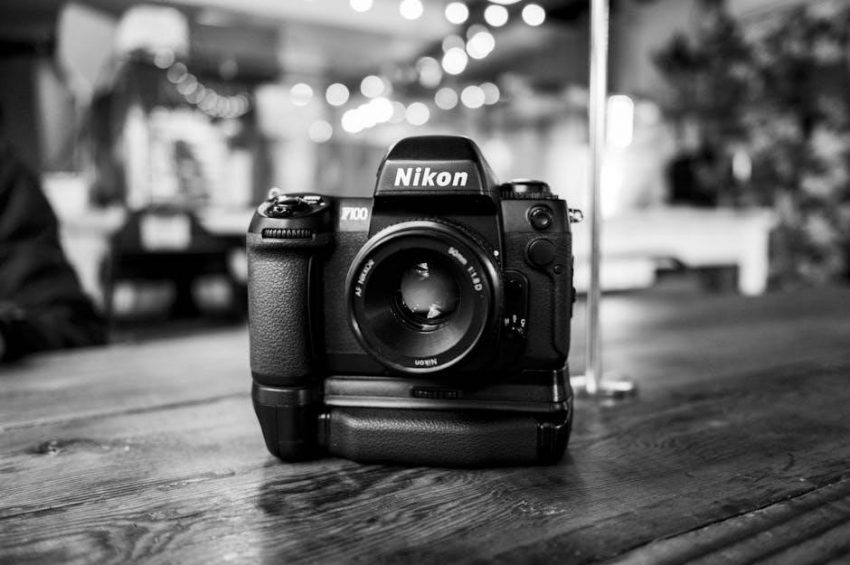
The Nikon F, a revolutionary 35mm SLR, gained prominence with readily available user manuals and resources, including PDF versions for modern enthusiasts.
Its enduring legacy is supported by comprehensive documentation, ensuring accessibility for both novice and experienced photographers seeking guidance.
Historical Significance of the Nikon F
Launched in 1959, the Nikon F marked a pivotal moment in camera history, establishing Nikon as a leading manufacturer. Accessible user manuals, even decades later – including downloadable PDFs – facilitated its widespread adoption.
The camera’s robust design and interchangeable components, detailed in its instruction guides, influenced subsequent SLR development. Its enduring appeal is bolstered by readily available resources for continued use and understanding.
Key Features and Innovations
The Nikon F boasted a groundbreaking fully mechanical operation, detailed within its user manual, eliminating reliance on batteries for core functions. The innovative bayonet mount enabled quick lens changes, a feature explained in accompanying guides.
Its bright, large viewfinder and robust construction, highlighted in documentation, set new standards. Accessible manuals, including PDF versions, ensured users could fully leverage these advancements.
Understanding the Camera Body
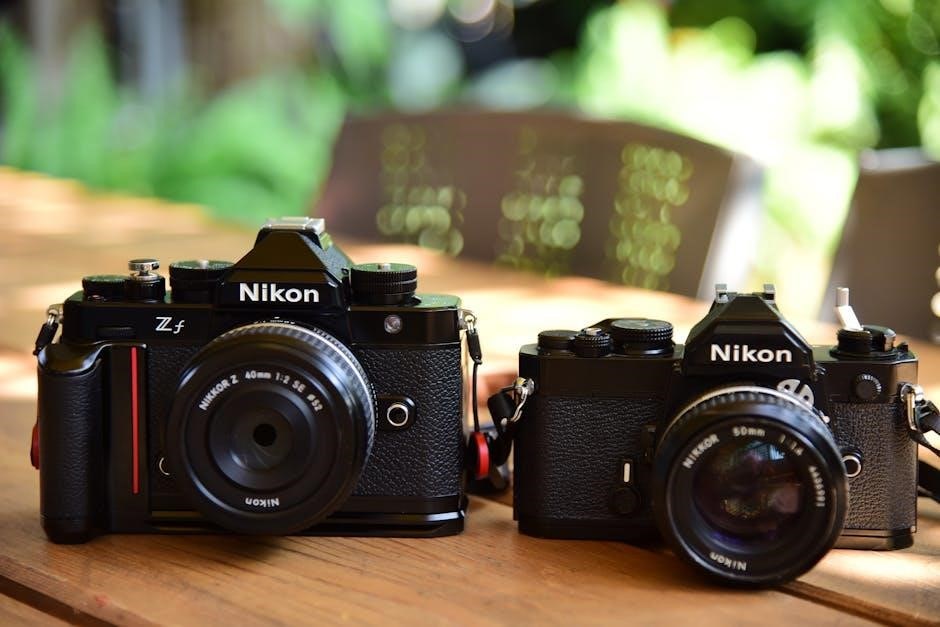
The Nikon F’s durable body, detailed in the user manual, features clearly labeled components and controls, facilitating easy operation and a comfortable shooting experience.
Front and Rear Views – Component Identification
The Nikon F’s front view showcases the lens mount, crucial for attaching various Nikon lenses, alongside the self-timer release. The rear panel, as detailed in the user manual, houses the film rewind knob, film advance lever, and the Photomic FTN finder eyepiece.
Essential controls like the shutter speed dial and film counter are also prominently displayed, enabling photographers to quickly adjust settings and monitor film usage. Understanding these components is key to mastering the camera.
Controls and Dials – A Detailed Overview
The Nikon F’s controls, thoroughly explained in the user manual, begin with the shutter speed dial, offering settings from 1 second to 1/1000th of a second. The aperture ring, located on the lens, works in tandem. The film advance lever cocks the shutter and advances the film.
Additionally, the rewind crank retracts the film, and the self-timer allows for delayed exposures. Mastering these dials ensures precise control over photographic outcomes, as detailed in available resources.
Loading and Unloading Film
The Nikon F user manual details a straightforward film loading process, emphasizing proper film placement and advancement, alongside clear instructions for safe film removal.
Film Types Compatible with the Nikon F
The Nikon F, as detailed in its user manual, readily accepts standard 35mm film formats, including black and white, color negative, and color slide (transparency) films.
The camera’s versatility extends to various ISO speeds, allowing photographers to adapt to diverse lighting conditions. While modern films are generally compatible, the manual advises checking film specifications for optimal results and proper winding.
Proper Film Loading Procedure
The Nikon F’s user manual emphasizes a careful film loading process. First, open the back cover and insert the film canister into the left-side chamber.
Thread the film leader to the take-up spool, ensuring it engages correctly. Advance the film a couple of times, checking for secure attachment before closing the back cover. Proper loading prevents damage and ensures accurate exposures.
Rewinding the Film
The Nikon F user manual details a straightforward film rewinding process. Locate the rewind crank on the camera’s top. Gently lift and pull out the rewind knob.
Turn the crank in the direction indicated by the arrow, feeling for resistance as the film fully retracts into the canister. Once fully rewound, the resistance will lessen, allowing easy removal of the film.

Using the Viewfinder and Focusing
The Nikon F’s Photomic FTN finder, as detailed in the user manual, offers split-image and microprism focusing aids for precise image sharpness.
Understanding the Photomic FTN Finder
The Photomic FTN finder, a key component of the Nikon F, provides through-the-lens (TTL) metering. User manuals emphasize that no exposure compensation is needed, as the meter reads light after it passes through the lens.
This system automatically adjusts for lens characteristics, simplifying exposure determination. The finder also incorporates focusing aids like a split-image and microprism collar, crucial for achieving sharp images, as explained in available documentation.
Focusing Techniques – Split-Image and Microprism
Nikon F user manuals detail focusing using the split-image and microprism collars within the viewfinder. The split-image presents two offset halves; precise focus aligns them into a single, unified image.
The microprism area offers a textured appearance when out of focus, becoming smoother as sharpness is achieved. Mastering these techniques, as outlined in guides, ensures consistently accurate focus for optimal image quality.

Exposure Control and Metering
Nikon F user manuals emphasize that the Photomic FTN finder doesn’t require exposure compensation, as it accurately meters light through the lens.
Aperture and Shutter Speed Relationship
Nikon F manuals detail the crucial interplay between aperture and shutter speed for proper exposure. A wider aperture (lower f-number) allows more light, requiring a faster shutter speed, while a narrower aperture (higher f-number) needs a slower shutter speed.
Understanding this relationship, alongside the built-in meter’s readings, is fundamental to achieving desired photographic effects like depth of field and motion blur.
Using the Built-in Light Meter
Nikon F user manuals emphasize the Photomic FTN finder’s meter, which automatically compensates for lens characteristics. To utilize it, set the desired shutter speed, then adjust the aperture until the meter needle aligns with the center mark.
No exposure compensation is typically needed, as the meter reads light through the lens, providing accurate readings for various shooting scenarios.
Lenses and Mounts
Nikon F user manuals detail the Nikon F mount’s compatibility with a wide range of lenses, offering photographers versatile options for diverse photographic pursuits.
Nikon F Mount – Compatibility
Nikon F user manuals thoroughly explain the Nikon F mount’s exceptional compatibility, a cornerstone of the system’s longevity. This mount design allowed for use with numerous Nikon lenses, both contemporary and those developed later.
Adapters further broadened compatibility, enabling the use of lenses from other manufacturers, solidifying the Nikon F’s place as a versatile platform for photographic expression and experimentation.
Types of Lenses Available
Nikon F user manuals detail a vast array of lenses designed for the system, ranging from standard 50mm primes to telephoto zooms. These included Nikkor lenses known for their optical quality.
Manuals illustrate how different focal lengths and apertures impact image characteristics, empowering photographers to select the ideal lens for diverse shooting scenarios and creative visions.

Shooting Modes and Functions
Nikon F user manuals primarily focus on single exposure mode, alongside the self-timer function, offering a straightforward, fully manual shooting experience for photographers.
Single Exposure Mode
The Nikon F operates predominantly in single exposure mode, a hallmark of its fully manual design. User manuals detail the process of setting aperture and shutter speed independently for each photograph. This requires a thorough understanding of the exposure triangle, as the camera lacks automatic assistance.
Each press of the shutter release captures one image, demanding deliberate composition and precise settings. Mastering this mode is central to utilizing the Nikon F’s capabilities effectively.
Self-Timer Operation
The Nikon F’s self-timer, detailed in the user manual, allows for delayed shutter release – typically around 10 seconds. Activation involves using the lever located near the shutter button, moving it to the ‘B’ or self-timer position.
This feature is ideal for self-portraits or situations requiring the photographer to be included in the frame. The manual emphasizes ensuring stability during the delay to avoid camera shake.
Maintenance and Care
The Nikon F user manual stresses common-sense care for longevity; treat the camera with respect, ensuring proper cleaning of both the body and lens components.
Cleaning the Camera Body and Lens
The Nikon F manual emphasizes gentle cleaning practices. Use a soft brush to remove dust from the body and lens elements, avoiding harsh chemicals or abrasive materials.
For stubborn marks, a slightly dampened soft cloth can be employed, but ensure no moisture enters the camera’s internal mechanisms. Lens cleaning should prioritize specialized lens tissues to prevent scratches and maintain optimal image quality.
Proper Storage Techniques
The Nikon F manual advises storing the camera in a dry, dust-free environment, ideally within a fitted case or bag. Remove batteries to prevent corrosion and potential damage.
Avoid prolonged exposure to extreme temperatures or humidity. For lenses, use rear caps and store them upright to prevent element separation. Regular airing can further safeguard against mold growth.
Troubleshooting Common Issues
The Nikon F manual details solutions for film advance problems and metering malfunctions, offering guidance to resolve typical operational challenges encountered by users.
Problems with Film Advance
The Nikon F user manual addresses film advance issues, suggesting checks for proper film loading and ensuring the advance lever engages correctly.
If the film isn’t advancing, verify the rewind knob isn’t in the rewind mode. A sticky shutter mechanism or damaged gears could also cause problems, potentially requiring professional servicing as detailed in the manual’s troubleshooting section.
Metering System Malfunctions
The Nikon F user manual details troubleshooting for metering issues, advising users to check the battery condition within the Photomic finder.
Incorrect meter readings can stem from dirty meter cells or a faulty coupling between the finder and camera body. The manual recommends professional inspection if self-checks don’t resolve the problem, ensuring accurate exposure control.

Advanced Techniques
The Nikon F user manual suggests utilizing external light meters for precise readings, alongside mastering depth of field control for creative image outcomes.
Using External Light Meters
For advanced Nikon F users, the manual implies supplementing the built-in meter with external devices offers greater accuracy, particularly in challenging lighting;
These meters allow for incident light readings, measuring the light falling on the subject, rather than reflected light, providing more reliable exposure settings. Understanding how to correlate these readings with the camera’s aperture and shutter speed controls is key to mastering exposure.
Depth of Field Control
The Nikon F manual doesn’t explicitly detail depth of field control, but understanding aperture’s role is crucial. Smaller apertures (higher f-numbers) yield greater depth of field, keeping more of the scene in focus.
Conversely, wider apertures (lower f-numbers) create shallow depth of field, isolating the subject. Mastering this relationship, alongside focal length, is vital for creative image control.

Accessories for the Nikon F
The Nikon F user manual highlights filters and lens hoods as essential accessories, enhancing image quality and protecting the lens from flare and damage.
Filters and Lens Hoods
The Nikon F user manual emphasizes the importance of filters for correcting exposure issues and adding creative effects, like polarization or softening. Lens hoods, crucial for minimizing flare and enhancing contrast, are also detailed.
These accessories protect the front element and improve image clarity, particularly in bright sunlight. Proper filter selection and hood usage, as outlined in the manual, significantly impact photographic results.
Motor Drives and Other Attachments
The Nikon F user manual details compatible motor drives for continuous shooting, enhancing capabilities for action photography. It also covers various attachments, expanding the camera’s functionality beyond standard operation.
These additions, while optional, offered professionals increased speed and versatility. The manual provides instructions for proper installation and operation of these accessories, ensuring seamless integration with the Nikon F system.
Nikon F vs. Later Models
The Nikon F user manual serves as a historical reference, highlighting the foundational design that influenced subsequent models like the F2, showcasing its evolution.
Evolution of the Nikon F System
The Nikon F’s initial user manual detailed a groundbreaking system, quickly expanding with accessories and improved finders like the Photomic FTN. Later models, such as the F2, built upon this foundation, incorporating advancements in metering and automation.
These enhancements, documented in updated manuals, maintained compatibility with the original F mount, ensuring a continuous evolution for photographers and a lasting legacy for the system.
Comparing Features with the Nikon F2
The Nikon F2’s user manual highlighted key improvements over the original F, including a larger viewfinder and more accurate through-the-lens (TTL) metering. While the F relied on external light meters or the Photomic finder, the F2 integrated metering directly into the camera body.
Despite these advancements, both cameras shared the same F mount, allowing for lens compatibility, as detailed in their respective manuals, offering a smooth transition for users.
Resources and Further Information
Original Nikon F manuals and supplementary guides are available online, alongside active forums dedicated to this classic camera, aiding user understanding.
Where to Find Original Manuals
Locating original Nikon F documentation is surprisingly accessible in the digital age. Several websites archive PDF versions of the user manual, offering a convenient download option.
The Internet Archive hosts scanned copies, while dedicated camera manual sites provide direct links. These resources ensure photographers can readily access detailed instructions and troubleshooting guidance for this iconic SLR.
Online Communities and Support Forums
Numerous online communities cater to Nikon F users, offering invaluable support and shared knowledge. Digital Photography Review’s forums, specifically the FX SLR section, frequently discuss the Nikon F.
These platforms allow users to exchange tips, troubleshoot issues, and access collective experience regarding the camera and its manual, fostering a collaborative learning environment.
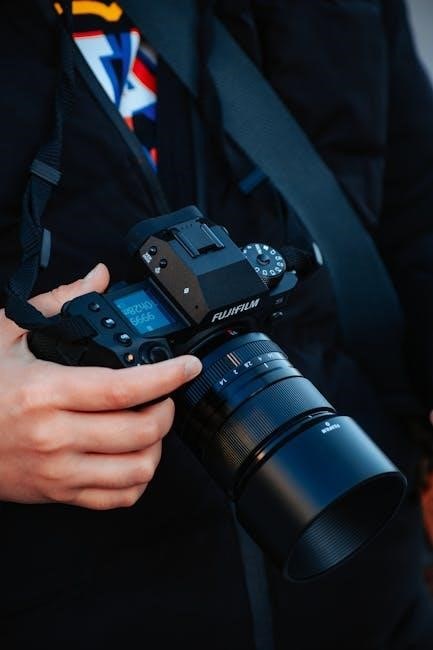
Specifications of the Nikon F
Detailed technical specifications, including weight and dimensions, are crucial for understanding the Nikon F. User manuals often contain this vital information for reference.
Technical Details and Measurements
The Nikon F’s user manual details its robust mechanical construction, featuring a focal plane shutter with speeds from 1 to 1/1000th of a second, plus Bulb. It measures 147.5mm (W) x 106.5mm (H) x 82.5mm (D) and weighs approximately 745g without a lens.
The manual also specifies the standard lens mount, film advance stroke, and various other precise measurements essential for optimal operation and maintenance.
Weight and Dimensions
According to the Nikon F user manual, the camera body itself has dimensions of 147.5mm in width, 106.5mm in height, and a depth of 82.5mm. Its substantial build contributes to a weight of approximately 745 grams (or 26.3 ounces) – measured without a lens attached.
These specifications highlight its solid, professional-grade construction, detailed within the provided documentation.