
Kegel Exercises in Spanish: A Comprehensive Guide
Discover readily available Spanish PDF guides detailing Kegel exercises, focusing on strengthening pelvic floor muscles. These resources offer step-by-step instructions
and illustrations for effective practice.
What are Kegel Exercises?
Kegel exercises, often described in Spanish-language PDFs as ejercicios de Kegel, are specifically designed to strengthen the pelvic floor muscles. These muscles play a crucial role in controlling urination and bowel movements, and are often targeted to address issues like incontinence. The core principle involves voluntarily contracting and relaxing these muscles, mimicking the sensation of stopping urine mid-stream – though it’s important not to practice Kegels while urinating.
Spanish PDF guides emphasize that these exercises aren’t about external movements; they are internal contractions. A common instruction found in these resources is to imagine stopping the flow of urine. Women are guided to focus on contracting the vaginal muscles, while both men and women can engage muscles around the anus. The goal is to feel a lifting and squeezing sensation. Consistent practice, as detailed in these downloadable guides, is key to achieving noticeable improvements in pelvic floor strength and function.
The Importance of Pelvic Floor Muscles
Pelvic floor muscles, frequently detailed in Spanish PDFs dedicated to ejercicios de Kegel, are a group of muscles supporting the bladder, uterus (in women), and rectum. These muscles are vital for maintaining continence – preventing involuntary urine or stool leakage. Spanish resources highlight that weakened pelvic floor muscles can lead to various issues, including urinary and fecal incontinence, and even prolapse, where organs drop from their normal position.
PDF guides often explain that daily activities like coughing, sneezing, lifting heavy objects, and even chronic constipation can strain these muscles. For women, pregnancy and childbirth significantly impact pelvic floor strength. Strengthening these muscles through Kegel exercises, as outlined in Spanish materials, can improve bladder and bowel control, enhance sexual function, and provide overall support to the pelvic organs. These guides emphasize proactive strengthening as a preventative measure, not just a reactive solution to existing problems.
Benefits of Kegel Exercises for Women
Spanish PDF guides on ejercicios de Kegel consistently emphasize the numerous benefits for women. Primarily, they address urinary incontinence, a common issue post-pregnancy or with age, by strengthening muscles controlling urine flow. These resources detail how Kegels can reduce leakage during activities like coughing or exercise.
Beyond continence, Spanish materials highlight improved sexual health. Stronger pelvic floor muscles can enhance sensation and orgasmic intensity. Furthermore, Kegels aid in recovery after childbirth, helping to restore muscle tone and support the pelvic organs. Many PDFs address pelvic organ prolapse, explaining how consistent exercises can alleviate symptoms and prevent progression.
The guides also note that Kegels can improve core stability and posture. They are presented as a safe and effective, non-invasive method for women of all ages to improve their overall pelvic health and quality of life.
Benefits of Kegel Exercises for Men
Spanish PDF resources on ejercicios de Kegel increasingly acknowledge their benefits for men, moving beyond the traditional focus on women’s health. These guides detail how Kegels can improve urinary control, addressing issues like dribbling after urination or urgency. Strengthening the pelvic floor muscles supports the bladder and urethra, reducing accidental leakage.
Importantly, Spanish materials highlight the positive impact on erectile function. Stronger pelvic muscles can contribute to firmer, longer-lasting erections by enhancing blood flow. Kegels are also presented as a tool to improve sexual stamina and control.
Furthermore, the PDFs explain how these exercises can aid in recovery after prostate surgery, helping to regain continence and sexual function. They are a conservative treatment option for conditions like prostatitis. The guides emphasize that Kegels are a discreet and effective way for men to proactively manage their pelvic health and improve overall well-being.

How to Perform Kegel Exercises Correctly
Spanish PDFs emphasize identifying the correct muscles – simulating stopping urine flow. They detail proper contraction and relaxation techniques, alongside breathing guidance for optimal results.
Identifying the Correct Muscles
Spanish-language PDF guides consistently highlight the importance of isolating the correct pelvic floor muscles for effective Kegel exercises. A common technique described involves imagining you are attempting to stop the flow of urine midstream. These resources emphasize that the muscles engaged during this action – those that contract and relax to control urination – are the target muscles.
Specifically, PDFs detail feeling a sensation of lifting and squeezing within the vaginal area (for women), or around the bladder and anus. It’s crucial to avoid contracting the abdominal, buttock, or thigh muscles. Many guides suggest performing the “stop-start” test – initiating urination and then consciously stopping the flow – to help pinpoint the correct muscle group.
Furthermore, these PDFs often advise against practicing Kegels while actually urinating, as this can weaken the bladder muscles and potentially lead to urinary retention. The focus remains on identifying and isolating the pelvic floor muscles through mindful contraction and relaxation, as illustrated in the provided diagrams and instructions.
Basic Kegel Exercise Technique
Spanish PDF guides uniformly recommend starting with a simple technique: contract the identified pelvic floor muscles, holding the contraction for 3-5 seconds. These resources emphasize focusing on squeezing and lifting, avoiding tension in other muscle groups like the abdomen or thighs. Following the contraction, relax the muscles completely for an equal duration – 3-5 seconds.
The guides typically suggest beginning with 10-15 repetitions, performed 3 times daily. Consistency is stressed as key to achieving results. Many PDFs illustrate proper form, showing a relaxed posture – lying down, sitting, or standing – to facilitate correct muscle engagement.
Importantly, these resources advise against holding your breath during the exercises. Maintaining normal breathing patterns is crucial. As proficiency increases, the hold time can gradually be extended, and variations, like quick flicks, can be incorporated, as detailed within the PDF instructions.
Breathing Techniques During Kegels
Spanish PDF guides consistently highlight the importance of coordinated breathing during Kegel exercises. Most resources advise against holding your breath, as this can increase abdominal pressure and counteract the benefits of pelvic floor muscle contraction. Instead, they recommend a specific breathing pattern: inhale deeply before contracting the muscles, and exhale slowly during the contraction.
The rationale behind this technique, as explained in several PDFs, is that exhaling naturally engages the core muscles, providing additional support to the pelvic floor. This synchronized action enhances the effectiveness of the exercise. Some guides suggest visualizing the breath flowing down to the pelvic floor with each contraction.
Furthermore, these resources emphasize maintaining a relaxed and natural breathing rhythm throughout the entire exercise set. Avoid forcing the breath or straining. Proper breathing not only optimizes muscle engagement but also promotes relaxation and reduces tension, contributing to overall well-being.
Progression and Variations of Kegel Exercises
Spanish PDF guides detail a progressive approach to Kegel exercises, starting with basic contractions and gradually increasing intensity and duration. Initially, focus on holding each contraction for 3-5 seconds, followed by an equal relaxation period. As strength improves, aim to extend the hold to 10 seconds.
Variations outlined in these resources include “quick flicks,” involving rapid contractions and relaxations of the pelvic floor muscles. These are beneficial for improving responsiveness and control. Another variation involves performing Kegels in different positions – lying down, sitting, and standing – to challenge the muscles in various ways.
Advanced techniques, often found in more comprehensive PDFs, incorporate visualization and mental focus. Some guides suggest imagining lifting or squeezing an object with the pelvic floor muscles. Consistency is key; the documents recommend incorporating these exercises into your daily routine for optimal results.
Finding Spanish-Language Resources
Explore numerous Spanish PDF guides offering detailed instructions on Kegel exercises. These downloadable resources provide comprehensive information for strengthening pelvic floor muscles effectively.
Spanish PDF Guides for Kegel Exercises
Numerous Spanish-language PDF guides are readily accessible online, providing comprehensive instructions for performing Kegel exercises correctly. These resources are invaluable for individuals who prefer a downloadable, printable format for easy reference. Many guides detail the importance of identifying the correct pelvic floor muscles, often including diagrams to aid in visualization.
Specifically, documents like “Guia de Ejercicios Kegel y Bolas Chinas 2016” offer detailed exercises and information. Others, such as “Libro Urofisioterapia Espanol,” provide a more in-depth exploration of urotherapy techniques, including Kegels, spanning multiple pages. These PDFs often cover variations of the exercises, progression strategies, and guidance for specific conditions like urinary incontinence.
Furthermore, these guides frequently emphasize the benefits of consistent practice, both during and after pregnancy, and for managing prolapse. They often include advice on incorporating Kegels into daily routines and avoiding common mistakes. Searching online using keywords like “ejercicios de Kegel PDF en español” will yield a variety of options to suit individual needs and preferences.
Online Spanish Articles and Websites
A wealth of Spanish-language articles and websites offer detailed information about Kegel exercises, complementing downloadable PDF guides. These online resources provide accessible explanations of pelvic floor muscle function and the benefits of regular Kegel practice for both men and women. Many sites break down the exercises into simple, easy-to-follow steps, often including illustrative images or videos.
Several websites focus specifically on women’s health, detailing how Kegels can aid in pregnancy, postpartum recovery, and managing urinary incontinence. Others address men’s health concerns, such as prostate health and erectile dysfunction. These platforms often feature expert advice from healthcare professionals and patient testimonials.
Searching for terms like “ejercicios de Kegel para mujeres” or “ejercicios de Kegel para hombres” will yield numerous relevant results. These articles frequently emphasize proper technique, breathing exercises, and the importance of consistency. They also often link to downloadable resources, including PDF guides, for a more comprehensive learning experience.
Spanish Video Tutorials on Kegel Exercises
Visual learners will find Spanish video tutorials invaluable for mastering Kegel exercise technique. Platforms like YouTube host numerous channels dedicated to women’s and men’s health, offering step-by-step demonstrations in Spanish. These videos often showcase correct muscle engagement and common mistakes to avoid, enhancing understanding beyond static PDF guides.
Many tutorials feature healthcare professionals – physiotherapists and urologists – providing expert guidance and answering frequently asked questions. They demonstrate variations of Kegel exercises, including quick flicks and longer holds, catering to different fitness levels and needs. Some videos specifically address Kegel exercises during and after pregnancy.
Searching for “ejercicios de Kegel tutorial” or “cómo hacer ejercicios de Kegel” will reveal a wide range of options. These videos often include on-screen text reinforcing key points and visual cues to help viewers identify the correct muscles. They provide a dynamic and engaging way to learn, supplementing information found in PDF resources.
Kegel Exercises for Specific Conditions
Explore Spanish PDF guides detailing how Kegel exercises address urinary incontinence, prolapse, and postpartum recovery. Targeted routines enhance pelvic floor strength for specific health needs.
Kegels for Urinary Incontinence (Incontinencia Urinaria)
Spanish-language PDF guides extensively cover Kegel exercises as a primary treatment for incontinencia urinaria, or urinary incontinence. These resources emphasize strengthening the pelvic floor muscles to regain control over bladder function. They detail how consistent contractions and relaxations can reduce leakage during activities like coughing, sneezing, or exercise.
Many PDFs provide specific routines tailored to different severities of incontinence, starting with basic techniques and progressing to more challenging variations. They often include illustrations demonstrating proper muscle engagement – focusing on contracting the muscles as if stopping urine flow.
Furthermore, these guides highlight the importance of identifying the correct muscles, differentiating them from abdominal or gluteal muscles. They also address common mistakes and offer troubleshooting tips for maximizing effectiveness. Resources often recommend integrating Kegels into daily routines and maintaining consistency for optimal results, offering a non-invasive approach to managing urinary incontinence.
Kegels During and After Pregnancy (Embarazo y Postparto)
Spanish PDF guides dedicated to prenatal and postnatal care prominently feature Kegel exercises (ejercicios de Kegel) as crucial for both embarazo and postparto. These resources explain how pregnancy weakens pelvic floor muscles due to the weight of the baby and hormonal changes, increasing the risk of incontinence.
The PDFs detail how performing Kegels during pregnancy can help prepare the pelvic floor for labor and delivery, potentially reducing tearing and speeding recovery. Postpartum guides emphasize rebuilding strength after childbirth, addressing common issues like stress incontinence and pelvic organ prolapse.
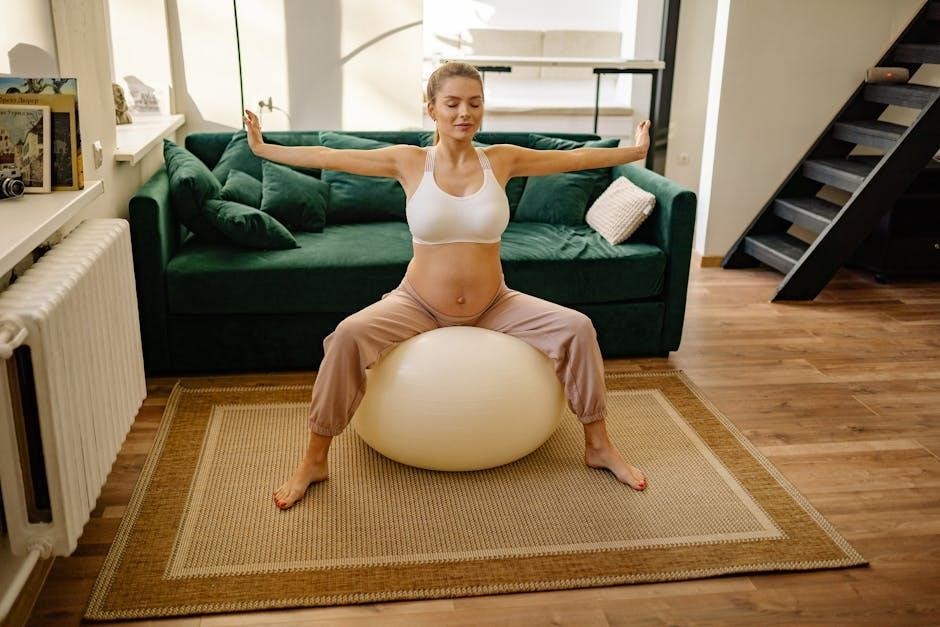
Illustrations within these guides demonstrate proper technique, advising expectant and new mothers to focus on controlled contractions and relaxations. They often provide tailored routines for each trimester and the postpartum period, emphasizing gradual progression. Resources also highlight the importance of consulting with a healthcare professional before starting any exercise program during or after pregnancy.
Kegels for Prolapse (Prolapso)
Spanish PDF resources addressing pelvic organ prolapse (prolapso) consistently recommend Kegel exercises (ejercicios de Kegel) as a foundational component of conservative management. These guides explain how weakened pelvic floor muscles contribute to the descent of organs like the bladder, uterus, or rectum.
The PDFs detail how consistent Kegel practice can help improve support for these organs, alleviating symptoms such as pressure, discomfort, and incomplete emptying. They often include diagrams illustrating the affected anatomy and demonstrating correct muscle engagement.
Specific routines are often provided, emphasizing slow, sustained contractions rather than quick squeezes. These guides frequently advise combining Kegels with other lifestyle modifications, like avoiding heavy lifting and managing constipation. It’s crucial to note that PDFs consistently recommend consulting a healthcare professional for a proper diagnosis and personalized treatment plan, as Kegels may not be suitable for all types of prolapse.
Troubleshooting and Common Mistakes
Spanish PDF guides on Kegel exercises (ejercicios de Kegel) frequently dedicate sections to troubleshooting common difficulties and mistakes. A recurring issue highlighted is incorrect muscle engagement – many individuals mistakenly contract abdominal, buttock, or thigh muscles instead of the pelvic floor.
These resources emphasize the importance of isolating the correct muscles, often suggesting the “stop-the-flow-of-urine” test (though discouraged for regular practice). PDFs also address inconsistent practice, stressing the need for regular, daily sessions for optimal results.
Another common mistake detailed is holding one’s breath during exercises. Guides consistently advise maintaining normal breathing throughout the contractions and relaxations. They also caution against overdoing it, recommending starting with a manageable number of repetitions and gradually increasing intensity. Finally, PDFs often reiterate the importance of seeking professional guidance if symptoms worsen or don’t improve with consistent, correct practice.